You can stay productive during exams by planning your study schedule and breaking tasks into smaller sections. Also, you should focus on active recall, take regular breaks, minimize distractions, get enough sleep, and balance self-care with studying.
It is normal for students to get stressed when it comes to attending midterm and final examinations. Some people struggle to balance studying with everyday life, and a lot of people experience difficulties in understanding difficult subjects. All these make exams feel even more overwhelming. However, with the right approach, students can easily prepare well for the exams. If you are a student unsure of how to study effectively for exams, read this blog. Here, we have recommended practical tips that can make studying easier, reduce stress, and improve your chances of doing well on your exams and securing high grades.
How to Stay Productive During Exams
Is it challenging for you to stay focused and productive during midterms and final exams? Don’t worry! You are not alone. By following certain study tips, you can easily handle this situation. Generally, staying productive during exams doesn’t mean studying all the time. It also means using effective strategies to stay focused, organized, and less stressed.
The following are some expert-approved tips that can help you manage your studies, whether you are juggling classes, a part-time job, or just trying not to feel burned out. Simply by following those tips, you can also feel more confident and prepared to handle even your toughest exams.
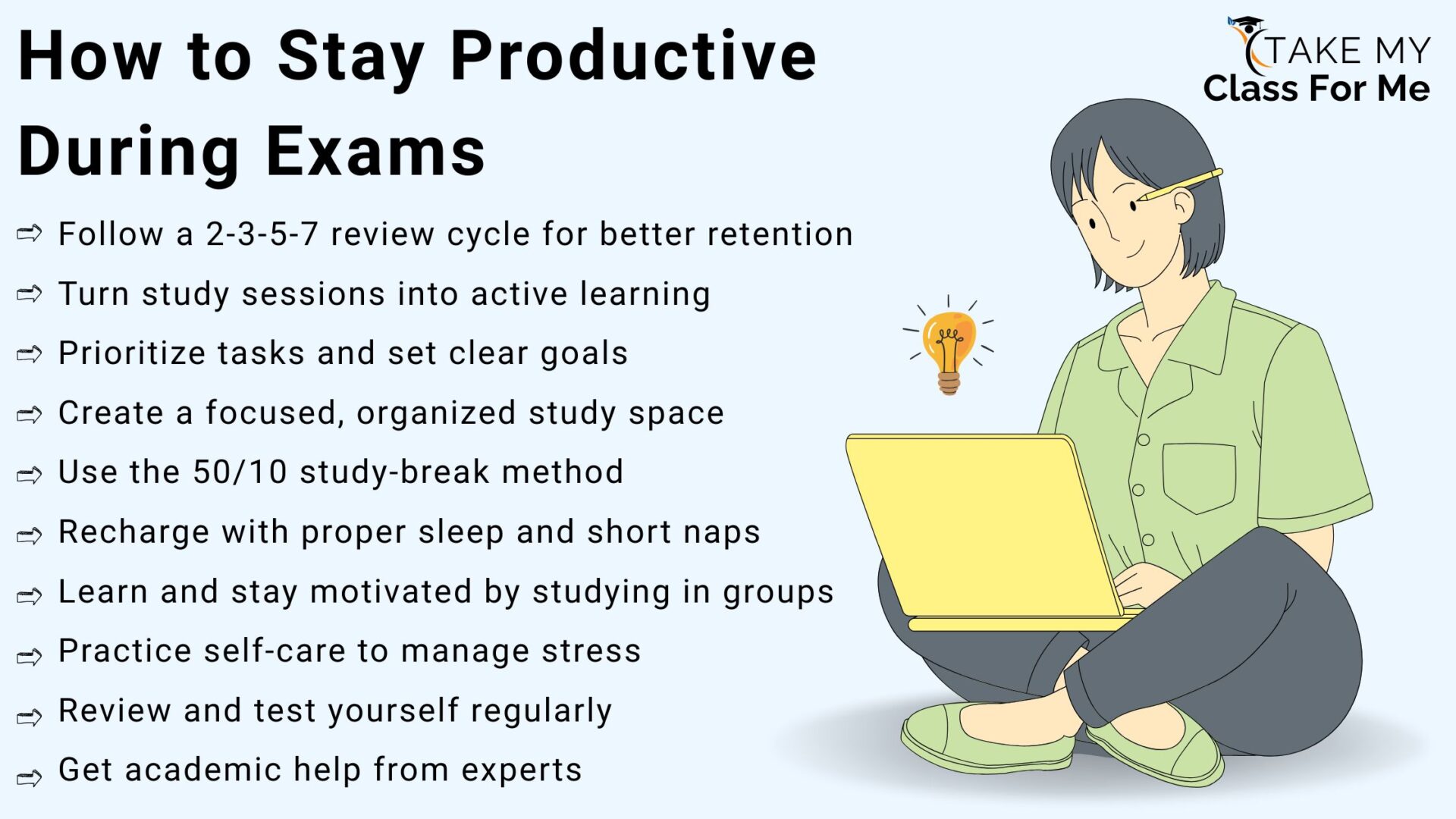
1. Follow a 2-3-5-7 review cycle for better retention
The 2-3-5-7 Method is one of the effective ways to make studying during exams less stressful. Instead of cramming everything at once, try to break your study time into small review sessions at 2, 3, 5, and 7 hours. This method can improve memory by up to 85%. Also, you can use flashcards or short quizzes to study easily. Over 80% of students have seen better grades with this approach. Usually, taking short breaks will keep your mind fresh, and tutors say it works especially well for tough subjects.
2. Turn study sessions into active learning
Passive review, like just reading notes, is not very effective for last-minute exam prep because your brain doesn’t really retain the information. So, experts recommend using active recall instead. You can boost your productivity by up to 85% by discussing topics in a group or solving problems while studying. This method will help you remember information faster, save time, and keep you focused, even during online classes or stressful situations. Additionally, you can use study planner apps like Shovel and Tweak Calendar to organize your tasks and make the most of your time before exams. Instead of thinking, ‘Can I Pay Someone to do My Online Class?’ you can also get assistance from skilled tutors.
3. Prioritize tasks and set clear goals
Another good way to stay productive during exams is to organize your study workload. Break your lessons into smaller, manageable sections and create a study schedule. This will keep your study plan clear and easy to follow. Also, research shows that 90% of students improved their grades by setting goals. Therefore, simply by focusing on the most important tasks first, you can avoid last-minute stress. Most importantly, keeping track of deadlines will help you plan your study time realistically and avoid rushing at the last minute.
4. Create a focused, organized study space
Your learning environment can greatly affect your success. So, choose a quiet area where your study materials are easy to reach. This can save you up to 50% of your time since you won’t waste time searching for things. Also, creating a productive study space can help you stay productive, refreshed, and prepared during your midterms and final exams. If you avoid cramming and stay focused throughout the semester, this approach will make studying much easier.
5. Use the 50/10 study-break method
If you want to stay motivated during exam preparation, then follow the 50/10 study method. It is a great last-minute study tip that will help you focus deeply without burning out. First, study for 50 minutes, and then take a 10-minute break. Usually, breaking your study material into smaller chunks and keeping your study space distraction-free can increase your chances of getting good grades by up to 70%. Also, it is a simple way to boost your marks and study more efficiently.
6. Recharge with proper sleep and short naps
In case you are cramming for an exam, try to take a nap. It can help you stay refreshed and manage deadlines more effectively. Some studies show that a 60-minute nap can improve memory by up to 85% and make it easier for you to remember what you have studied. You can’t learn everything at once, but naps will give your brain time to process and organize new information. Typically, during sleep, memories will be strengthened, and this will assist you in effortlessly retaining what you have learned.
7. Learn and stay motivated by studying in groups
In general, studying with others can make learning easier and more motivating. If you are confused about something, join an online peer group or a help center for quick support. When you study with friends, you will get a chance to create a supportive learning environment where everyone can guide each other. This will boost your last-minute exam preparation by up to 80%. Remember, learning together will not only help you understand the material better but also make studying more productive and less stressful.
8. Practice self-care to manage stress
If you wish to stay productive when you prepare for exams, then make sure to take care of your mental health and well-being. It is normal to feel burned out during exam time, but neglecting self-care can affect your focus and sleep. Take breaks and care for yourself as a part of your study plan. After comparing two students, experts state that a student who practices yoga scored 92% and found studying manageable. On the other hand, they say that a student who studied nonstop scored 89% and felt bored and overwhelmed. This shows that balancing self-care with studying can help you perform better in your academics.
9. Review and test yourself regularly
If you are studying at the last minute, blurting can save you a lot of time by helping you remember information faster by actively recalling it. Specifically, you can explain concepts in your own words, recall key terms, and write out steps for tough topics. Furthermore, you can use predictive questions to test yourself. This method will help you learn faster and feel more confident on exam day.
10. Get academic help from experts
If it is troublesome for you to study a complex subject or worry about your exams, then get Online Class Help Services by hiring a well-qualified and experienced tutor. The professionals will guide you in improving your comprehension of the subject, preparing for your exams, and achieving academically.
Conclusion
By following the tips suggested in this blog, you can study effectively and do well in your exams without stress. In case you still experience any problems in attending your mid-term or final examination, call us immediately or send a ‘Take My Class for me’ request. We have experts in diverse subjects to guide you in enhancing your learning experience and preparing well for your examinations. Particularly, with their support, you can shine well in your studies.
FAQs
1. How can I manage stress before an exam?
You can calm your nerves by slowing your breathing and breaking your revision into small, manageable tasks instead of cramming everything at once.
2. What are some self-care tips during exams?
Get enough sleep, eat well, stay hydrated, take short breaks, limit social media, keep your study space tidy, and practice quick relaxation techniques.
3. How many hours should I study daily during exam preparation?
Try to study 4-6 hours a day, split your work into smaller parts, and take a break from social media once a week to stay focused.