Selecting the right online class involves checking course quality, reading reviews, comparing costs, understanding your learning style, and choosing a platform with experienced instructors. These steps will help you learn effectively and achieve your academic goals.
Many learning websites and universities are offering a wide range of online courses on diverse disciplines. So, it can be challenging for students to choose the right online class. Generally, online courses will let you earn at your own pace, from anywhere, and often without spending too much. But picking the wrong course or learning platform can waste your time and money. Hence, before enrolling for an online course, you should do a little research and check whether the class matches your learning style and goals. In case you are still unsure how to select the right online class in college, read this blog. Here, we have recommended practical tips that will help college students in choosing the right online classes.
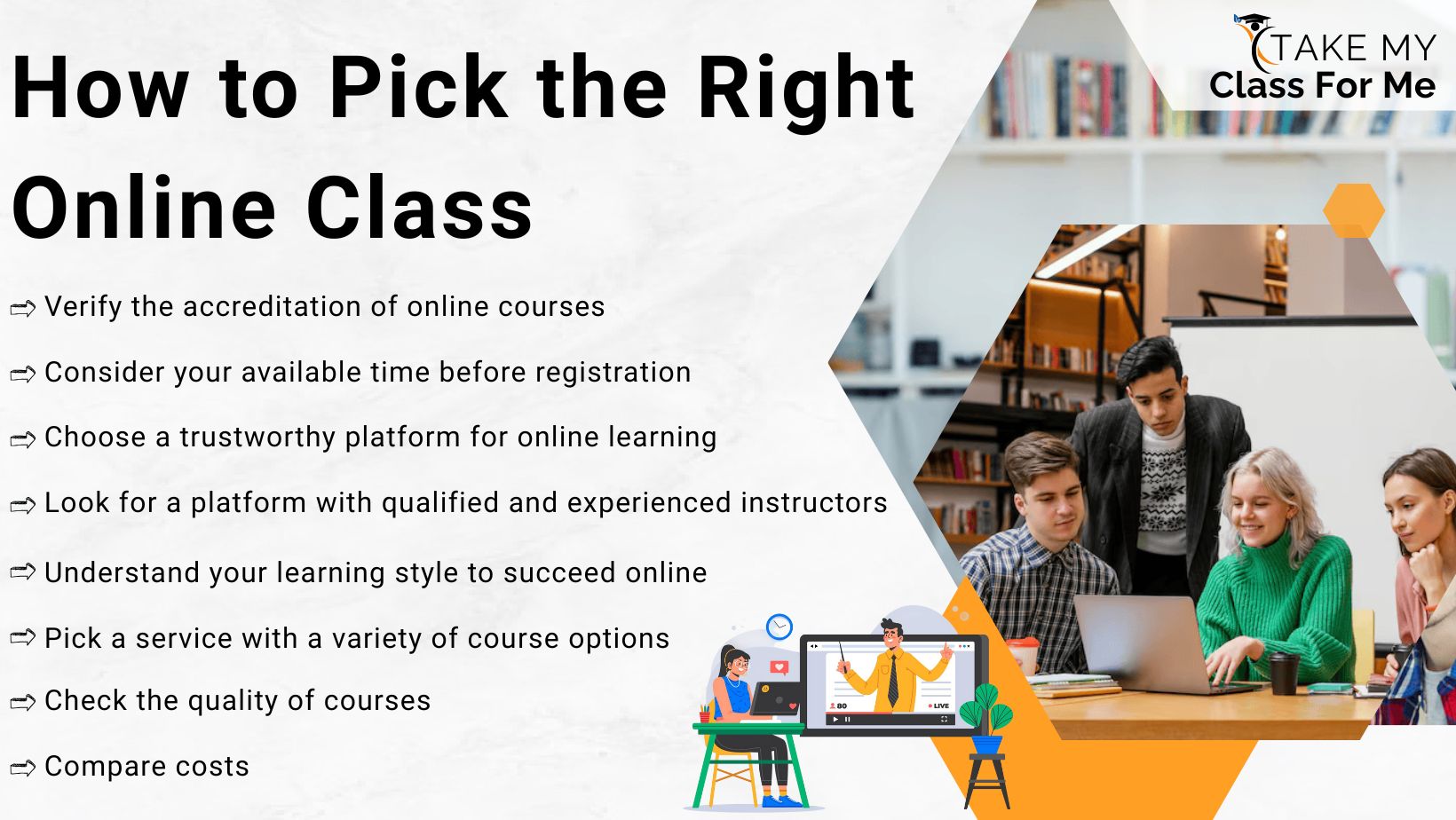
How to Pick the Right Online Class
There is nothing wrong with thinking – Can I Pay Someone to do My Online Class? On the internet, you can find several academic institutions and websites providing online courses. But remember, you will get a high-quality education only when you take classes from a recognized university. Especially, before you enroll for an online course, you should take into consideration several factors such as cost, duration, credibility, curriculum, language, and accessibility options.
The following are some practical strategies that will help you select the right online class for your college education
1. Verify the accreditation of online courses
Before you sign up for an online course, make sure it is offered by an accredited institution. You can check a school’s accreditation through trusted sources, such as the U.S. Department of Education or the Council for Higher Education Accreditation. Generally, accredited schools will follow quality standards for their curriculum and teachers. This means your course is recognized, and it will be accepted by employers and other colleges. Moreover, it will make you eligible for federal financial aid and help you easily transfer credits to other schools.
2. Consider your available time before registration
When you enroll in an online class, think about how much time you have for your studies. If you work 8 hours a day, consider whether you have enough energy and time to study. Online learning is flexible, but it can also be time-consuming. Most students need at least 10 hours per week for each class, and if you want top grades, it could take 15-20 hours, according to U.S. News & World Report.
Before you apply for an online course, ask these questions
- Can I set aside 2 hours per day to study?
- Does my work or family schedule allow consistent study time?
- Do I have a quiet space for learning?
- Can I stay motivated and meet deadlines?
Online classes generally require dedication and good time management skills. You can use the best time management tools like Trello, Asana, or Notion to succeed in any program.
3. Choose a trustworthy platform for online learning
Before you register for an online course, check third-party review sites, like Trustpilot. Usually, honest reviews will help you avoid scams, fake degrees, and low-quality courses.
Always choose a course that fits your academic goals and learning style. Especially if you are working or have other commitments, make sure to select an online course from a reputable platform that offers interactive features and good support. Typically, many quality online courses will let you connect with instructors through videos, chat, or other tools.
Additionally, look at the syllabus before enrolling and check if there is a refund policy. Also, pay close attention to reviews from students who completed the course and earned a certified diploma. Doing careful research will help you identify whether the platform is trustworthy or not.
4. Look for a platform with qualified and experienced instructors
Having experienced teachers in your online class can make a big difference in your success. They will give you personalized guidance and feedback to help you learn better and perform well in your exams. If needed, you can ask, Can I Pay Someone to Take My Online Exam? And get academic support from experts.
Generally, an experienced teacher will know the course well and can help you whenever you get stuck. Also, they will make sure you understand the material and gain the knowledge you need. So, look for courses with qualified instructors who have years of teaching experience. Additionally, give significance to online programs that encourage group work and collaboration. Working with others on projects and problem-solving will help you stay engaged and improve your critical thinking skills.
5. Understand your learning style to succeed online
Everyone has their own way of learning, and knowing your learning style can make online courses more effective. Some students learn best through hands-on activities, while others understand better by watching videos or joining interactive discussions.
Before you sign up for an online class, ask yourself these questions
- Do I learn better by watching videos?
- Do I understand more through assignments?
Always choose courses that offer different learning methods. Usually, seeing the same concepts in multiple formats can help you remember and understand the material better.
6. Pick a service with a variety of course options
Choosing the right online classes is important for your academic success. Therefore, look for a college or platform that offers a variety of courses for different subjects and skill levels. For example, if you want to study both economics and history, but the platform only offers history and geography, then find another option.
Courses can run on various platforms. So, better pick a service that allows you to take multiple classes in one place. Especially when it comes to selecting online classes, consider the variety of courses, the support services offered, and the school’s overall reputation.
7. Check the quality of courses
Before you apply for an online course, make sure to check its quality. Ask for a sample lesson or demo video to see the teaching style, content clarity, and overall learning experience. You can also talk to students who have already taken the course to get their honest feedback.
Reliable platforms have many satisfied learners and lots of reviews, which make it easy for you to gather information. Overall, checking course quality will help you avoid wasting time or money and ensure you choose a program that truly meets your goals.
8. Compare costs
Before you enroll in an online course, check the costs carefully. Specifically, compare tuition, subscription plans, and any one-time fees on different platforms. Also, be sure to see what is included, like course materials, certificates, and academic support.
The best online classes will give you good value by offering high-quality education at a reasonable price. Additionally, watch out for hidden fees and check the refund policy. By comparing your options, you can invest your money wisely without sacrificing quality.
Conclusion
We hope this blog has given you useful advice and easy steps to follow. Particularly, by following the recommended strategies, you can pick the best online class for your goals and set yourself up for success in college. In case you still experience difficulties in identifying the right online course, send us a ‘Take My Class for me’ request. Our platforms consist of well-qualified and experienced tutors to offer you personalized help with online classes on diverse subjects. With our expert support, you can succeed academically.
FAQs
1. What technical requirements do I need for an online class?
You need a computer or laptop, stable internet, a webcam and microphone, headphones, and updated software with antivirus for smooth learning.
2. What are the benefits and drawbacks of online classes for college students?
Online classes are flexible, save time and money, offer more course options, and support self-paced learning. Their drawbacks include less in-person interaction, a need for self-discipline, technical issues, and limited hands-on experience.
3. Are online classes cheaper than in-person classes?
Yes, online classes are usually more affordable since you only need a laptop and internet, while in-person classes involve higher tuition and travel costs.