To do well in proctored exams, make sure you understand all the exam rules. Most importantly, set up your computer and workspace, practice using the software, and manage your time carefully. Also, stay calm, avoid suspicious actions, and get expert help if technical issues arise.
Proctored exams are important for keeping online education honest and credible. They are tests supervised either in person or online, where students are monitored to prevent cheating and confirm their identity. As online learning becomes more popular, secure and reliable assessments are essential to ensure that students truly have the knowledge and skills being tested. In case you would like to know all about proctored exams or if you are unsure how to navigate the issues involved in proctored exams, read this blog. Here, we have explained how proctored exams work, the technology behind them, their challenges, and best practices. Simply by following the tips we have recommended, you can excel in proctored exams.
An Overview of Proctored Exams
A proctored exam is a test designed to ensure academic honesty and prevent cheating. During the exam, a proctor supervises the test-taker, verifies their identity, and maintains a controlled environment. These exams can be conducted either in a traditional classroom or online, each with its own rules and methods.
The following are the two types of proctored exams
In-Person Proctoring: This is a traditional method commonly used in schools, universities, and professional certification tests. In this type of proctored exam, a proctor will be physically present in the exam room to monitor students.
Online Proctoring: In this type, digital tools and devices will be used to supervise students remotely. So, proctors can easily watch live video feeds, record sessions, and use AI to detect suspicious activity. This method is becoming popular due to the growth of online learning. Moreover, it offers flexibility and convenience for both students and institutions.
Read More: Study Tips to Stay Productive During Examinations
Understand the Working of Proctored Exams
If you are an online student, then you must know how proctored exams work. Generally, proctoring makes sure your exams are fair and stops cheating. In this section, let us look at the step-by-step online proctoring process.
Register and choose your exam time
First, sign up for the test through the platform provided by your school or using the proctoring service, and choose a time that is convenient for you.
Set up the devices
Before your exam, make sure your computer, webcam, microphone, and internet meet all requirements. Also, check that the proctoring software works with your browser or operating system to avoid technical issues during the exam.
Verify your identity
For identity verification, show a valid photo ID, like a driver’s license or student ID, using your webcam. The proctor or software will confirm and record your identity to ensure you are the registered test-taker.
Live exam supervision
During your exam, a live proctor, AI software, or both will monitor you in real time. The system watches for unusual behavior, such as extra people in the room, suspicious movements, or unauthorized materials.
Submission and Review
After your exam, submit your answers through the platform. The system continues monitoring until the end, and any flagged activity is reviewed to ensure you followed all exam rules.
Read More: A Step-by-Step Guide to Prepare for University Entrance Exams
Technology that Ensures Fairness in Proctored Exams
Proctored exams use both AI and human proctors to monitor your test and ensure fairness. AI systems can detect suspicious behavior, like unusual eye movements or extra faces, while human proctors review any flagged activity. Advanced tools also include features such as audio monitoring, video monitoring, and screen capture to keep your exam environment secure and prevent cheating. In addition, your personal information is protected with strong encryption and privacy rules, and AI reviews behavior in real time and afterward. Together, these measures make your exam safe, fair, and trustworthy. If you would like to improve your knowledge of using the tools that support the proctored exam, it is not wrong to think, Can I Pay Someone to do My Online Class? By hiring experts, you can learn all about the proctored exams.
Challenges Involved in Proctored Exams
Proctored exams help keep online tests fair, but they can also come with challenges that affect your experience. By knowing these issues and how to handle them, you can make your exam go more smoothly. Otherwise, you can send ‘Take My Online Exam’ to experts and get customized assistance.
- You might not have a stable internet connection to undertake your exams.
- Software may fail to work with your computer or browser.
- Lack of professional support can make using the system harder.
- Audio, video, and screen capture surveillance might prove invasive in nature.
- Concerns over data security/privacy may arise
- The presence of observation may be anxiety-provoking
- Technician or system malfunctions, such as system crashes, can hinder the process of taking the exam.
Tips for Doing Well in Proctored Exams
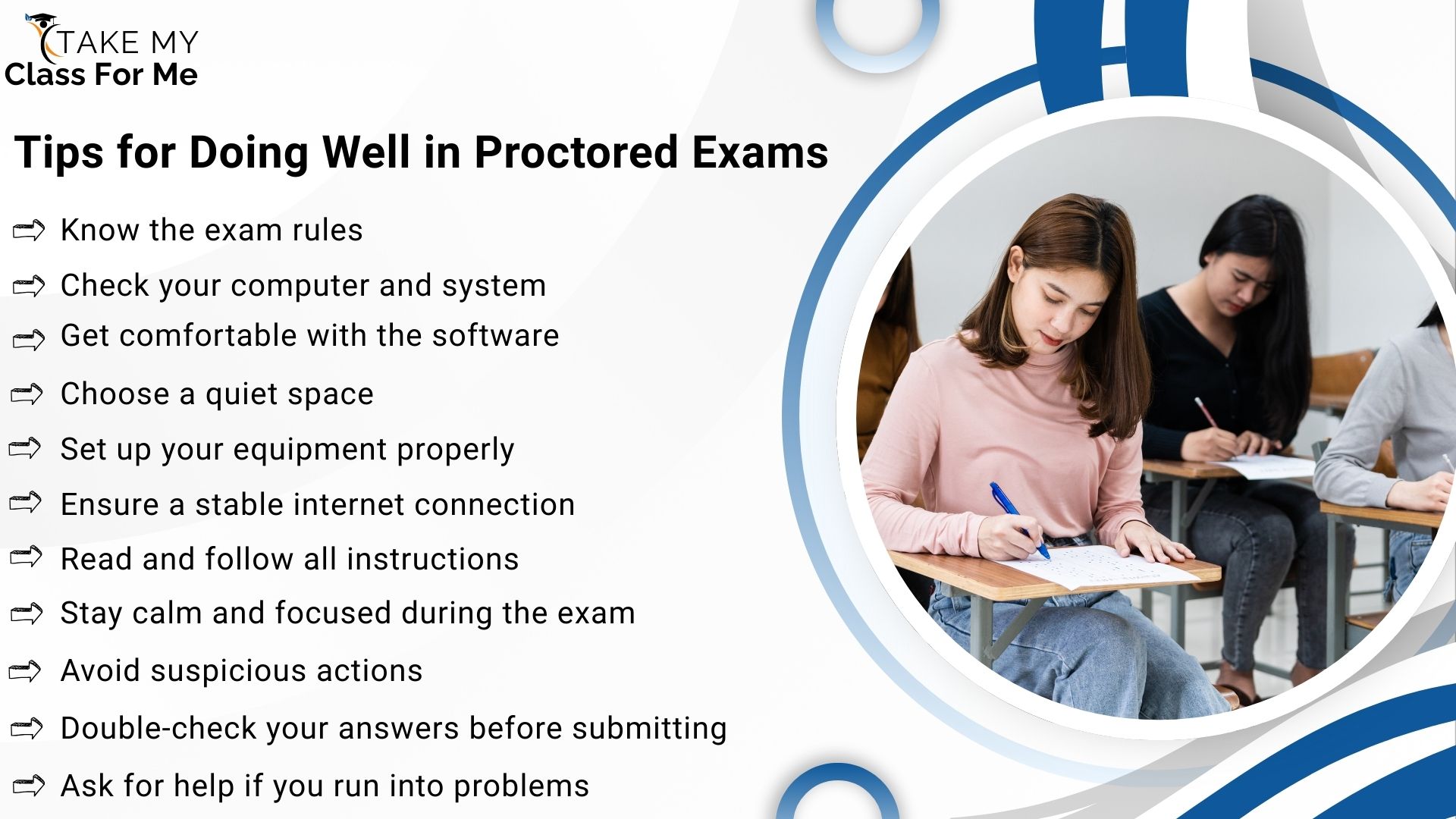
When you take proctored exams at home, you need to prepare well and follow some simple guidelines to make the process smooth and successful. These tips can help you do your best on the proctored exam.
Know the exam rules
Before your exam, make sure you know all the requirements. Check the guidelines from your school or proctoring service, confirm the date, time, and format, and pay attention to any special instructions.
Check your computer and system
Make sure to do a full technical check before your exam. Confirm that your computer has a working webcam, microphone, and stable internet. Also, use the software’s system check feature to make sure everything is compatible and working properly.
Get comfortable with the software
Get to know the proctoring software before your exam. Try any tutorials or practice tests to understand how the software works. This will help you feel more comfortable and less stressed on exam day.
Choose a quiet space
Select a quiet, well-lit room where you won’t be interrupted during your exam. Let your family or housemates know your exam schedule, and make sure your workspace is clear of clutter and any materials you aren’t allowed to use.
Set up your equipment properly
Position your computer and webcam so your face and surroundings are clearly visible. Also, make sure the room is well-lit, but avoid lighting from behind that hides your face. Finally, check your microphone so your voice is clear.
Ensure a stable internet connection
A stable internet connection is very important for your exam. So, use a wired connection if you can, since it is usually more reliable than Wi-Fi. If you have to use Wi-Fi, stay close to the router to reduce the chance of getting disconnected.
Read and follow all instructions
Listen carefully to the proctor’s instructions and follow all exam rules. Complete ID checks and room scans as required. Also, if the software flags any behavior, respond quickly to resolve the issue.
Stay calm and focused during the exam
Stay calm during your exam. If a question is too hard, skip it and come back later. Also, manage your time wisely so you can finish all parts of the exam.
Avoid suspicious actions
Make sure you stay in view of your webcam the entire time. Avoid looking around, talking to you, or moving too much, as these actions might be seen as suspicious by the proctor or software.
Double-check your answers before submitting
Before you submit your exam, go through your answers to make sure everything is complete. Check for any missed questions or mistakes. Once you are satisfied, submit your exam by following the given instructions.
Ask for help if you run into problems
If you have any technical problems during your exam, contact the proctoring service right away. You can use live chat or phone support to fix the issue quickly. Also, keep a record of the problem and inform your school if needed.
Read More: Studying for Final Exams: How to Boost Grades
The Bottom Line
By following the best practices suggested in this blog, you can handle your proctored exam successfully without stress. If you need expert assistance, approach takemyclassforme.us.com and send a ‘Take My Class for me’ request. Our team consists of well-qualified and experienced tutors on diverse subjects. They will assist you in enhancing your subject knowledge and guide you in mastering your proctored exams.
FAQs
1. How do proctors monitor the exam?
Proctors monitor exams through webcams, microphones, screen recording, and sometimes use AI tools that detect suspicious behavior in real time.
2. What should I do to avoid technical problems during the online exam?
Check your system, internet, and software compatibility beforehand, and be ready to contact support if issues arise.
3. How is my privacy protected during a proctored exam?
Proctoring software will use data encryption and follow privacy regulations to keep your recordings and personal information secure.